Water softener for an apartment: what actually works
Updated Oct 26, 2026
Yes, a water softener for an apartment works, as long as it softens at the shower instead of at the main line. The options that fit a rental are a shower softener, which connects to your shower hose without plumbing changes, and a portable RV softener on the shower floor. Both use ion-exchange resin and salt, which is what actually removes hardness. Shower filters don't, and whole-house systems need a plumber and a landlord's sign-off. Here is what a shower water softener is and how it differs from a filter.
The three real options
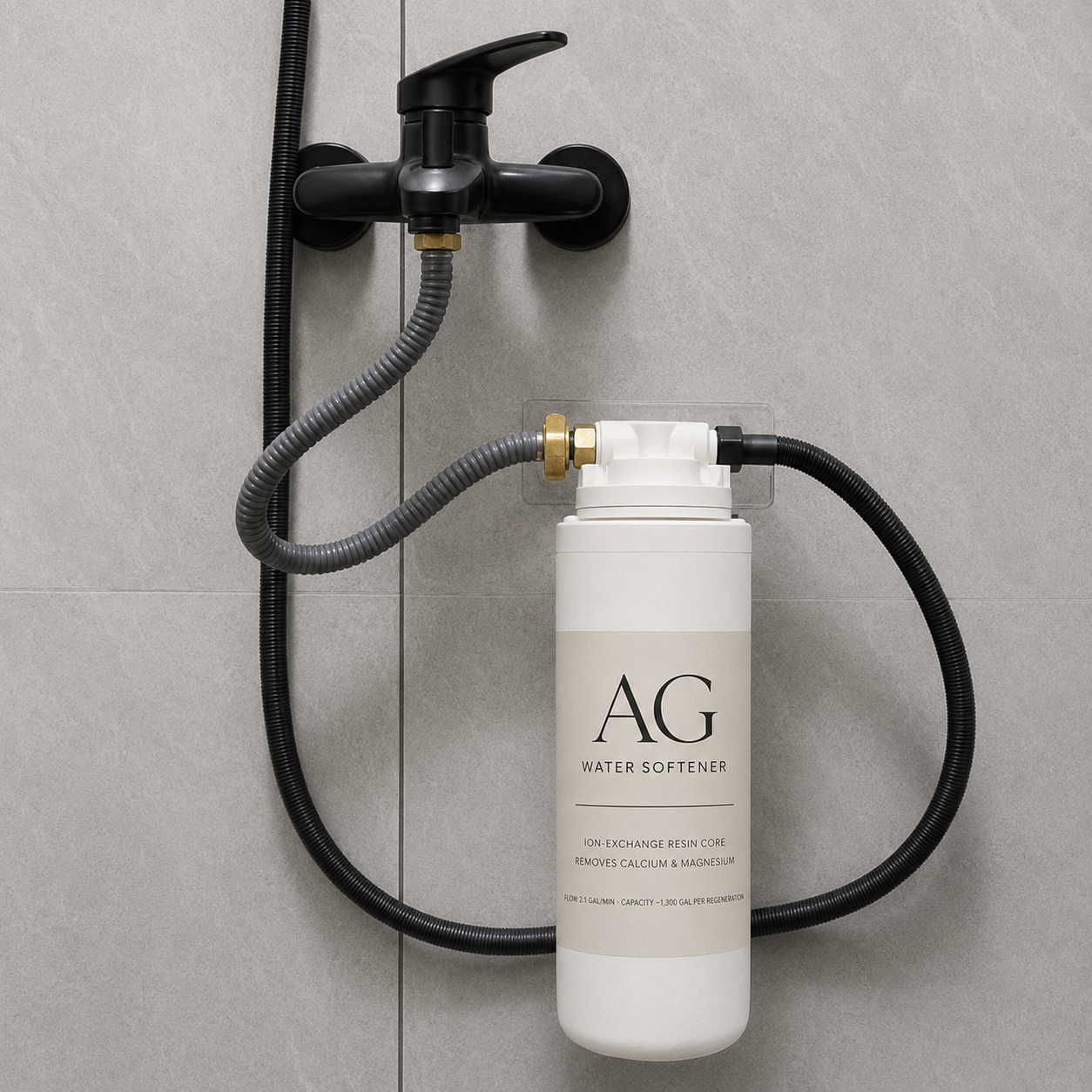
A shower softener. An ion-exchange unit that hangs on two adhesive hooks beside your shower and connects in line with a handheld shower hose. It takes no floor space and needs no plumbing changes, so there's nothing to ask a landlord about. This is what we make, the AG shower water softener, and two competitors make true softeners in the same class. The three-way comparison covers how they differ on recharge routines and terms.
A portable RV softener. These genuinely soften, and prices run from about $165 for compact units to about $280 for larger tanks. The tradeoff is bulk: a tank of about 30 pounds that lives on your shower floor and connects by hose. If you have a big shower and don't mind the tank, they work.
Wait until you own. A whole-house system softens every tap and protects the water heater. It also runs several thousand dollars all-in and requires additional plumbing work, which is why it's perfect for homeowners. If you're renting short-term in a soft-water city, doing nothing is a legitimate answer too.
What doesn't belong on this list: shower filters. That surprises a lot of people, so it gets its own section.
What makes a softener renter friendly
A hard water softener for apartments has to remove calcium and magnesium and leave the plumbing alone. For most renters, a water softener for apartment shower water is the whole job, because the shower is where hard water meets hair and skin. A portable water softener for apartment living should also come off in minutes and move with you. That's what makes a renter-friendly water softener: real ion-exchange softening with nothing a landlord has to approve.
A hard water softener for apartments and rentals
The AG Water Softener Complete Set is a hard water softener for apartments that works at the shower, where hard water meets your hair and skin. Inside is a bed of ion-exchange resin that pulls calcium and magnesium out of the water and recharges with plain salt (zero additives). The unit hangs on two adhesive hooks beside the shower and connects in line with a handheld shower hose. Nothing touches the building's plumbing, so there is nothing for a landlord or condo board to approve.
More answers and resources like these in your Google results, marked as preferred.
If you already tried a filter
Plenty of renters buy a filtered shower head first. The reviews are good and the price is reasonable. It just doesn't work on hardness, because it was never built to. Carbon and KDF media remove chlorine, and they do that job well. Calcium and magnesium pass straight through, which is why your water still leaves film on the glass and your hair still feels coated.
The label rarely helps. Products sold as "water softener shower heads" are usually chlorine filters with an optimistic name. The test is the mechanism: if it doesn't contain ion-exchange resin and take salt, it can't soften. Shower filter vs water softener walks through the chemistry.
None of this makes filters a scam. Chlorine removal is a real benefit, and the two devices solve different problems. It just means a filter can't be the answer to hard water, no matter what the listing says. Reddit threads on shower water softeners land on the same conclusion independently.
Can I install a water softener in my apartment?
Yes. A shower softener like the AG hangs on two adhesive hooks and connects in line with your shower hose. Nothing about it needs landlord permission, because nothing about it is permanent. Portable RV units need even less, just a hose connection. The only version that requires permission and a plumber is the whole-house system, and that's the one renters skip.
How to tell if your apartment has hard water
The signs show up on their own. White scale builds on the shower glass and fixtures, and hair starts feeling coated a few days after every wash. Soap gives it away too, either refusing to lather or refusing to rinse clean. For a number, a hardness test strip costs a few bucks at any hardware store and reads in thirty seconds.
Location is a guide, but a rough one. Las Vegas has a hard-water reputation and measures 291 ppm by its own utility's report. Madison, Wisconsin has no such reputation and measures harder, at 18 to 20 grains per gallon by the city's numbers. One AG customer, Conor in Tampa, FL, measured 190 ppm at the tap and 5 ppm after the softener. Tampa's water department reports an average total hardness of 211 mg/L for 2025 (City of Tampa 2025 Water Quality Report). Test rather than guess.
What hard water costs over two years
The purchase price is the smaller number. What separates the options is what they consume.
| Day 1 | Year 1 total | Year 2 total | |
|---|---|---|---|
| AG Water Softener | $279 | $291 | $303 |
| Jolie (filter, for comparison) | $169 | $274 | $414 |
The AG runs on plain salt from the grocery store, and both cartridges come in the box. Jolie's filter cartridges run $35 about every 90 days. And the two rows aren't doing the same job: the AG softens, while Jolie filters chlorine and leaves hardness in the water. The table exists because the filter route costs more over two years without touching the problem this page is about.
Figures checked against retailer listings: Jolie pricing October 4, 2026. If they change their prices, tell us and we'll update the table.
Salt: 500 g per cartridge per recharge, two cartridges, about 26 recharges a year for one person at 10 grains; plain salt at $8.34 per 40 lb (Walmart, October 21, 2026).
Hosting an Airbnb or short-term rental?
Hard water finds its way into guest reviews. Guests notice hair that won't rinse clean and water spots on the glass, even when they can't name the cause.
The AG Water Softener treats the one room where guests judge your water. It also cuts the scrubbing between guests: scale stops building on the glass, so turnovers get shorter. It installs without touching the property's plumbing, which matters when you're hosting out of a condo with an HOA or a building you don't own. When you sell or switch properties, removal takes minutes and the shower goes back to how you found it.
Each recharge lasts about two weeks for one person at 10 grains with both cartridges; a second person halves that, and harder water shortens it. Each cartridge's cycle takes about 40 minutes. How often to recharge a shower water softener has the interval at every hardness.
Frequently asked questions
Can I install a water softener in my apartment?
Yes. Shower softeners like the AG hang on adhesive hooks and connect to your shower hose, with no plumbing changes and nothing a landlord needs to approve. Portable RV softeners connect by hose. Only whole-house systems require installation you can’t do in a rental.
Do shower head water softeners work?
Most products sold under that name are chlorine filters and can’t remove hardness. The ones that work contain ion-exchange resin and recharge with salt. If a product doesn’t mention resin and salt, it filters rather than softens.
How can you tell if an apartment has hard water?
Scale on the shower glass and coated-feeling hair are the usual signs, along with soap that rinses poorly. A test strip from the hardware store gives you a number in thirty seconds.
Sources
- Las Vegas Valley Water District FAQ, hardness figures, accessed August 19, 2026
- City of Madison Water Utility FAQ, hardness figures, accessed August 17, 2026
- City of Tampa 2025 Water Quality Report, hardness figures, accessed October 4, 2026
- On The Go Portable Water Softener, pricing, accessed October 4, 2026
- Pro+Aqua Portable Water Softener, pricing, accessed October 4, 2026
- jolieskinco.com, pricing checked against retailer listings, October 4, 2026