★★★★★
Donna
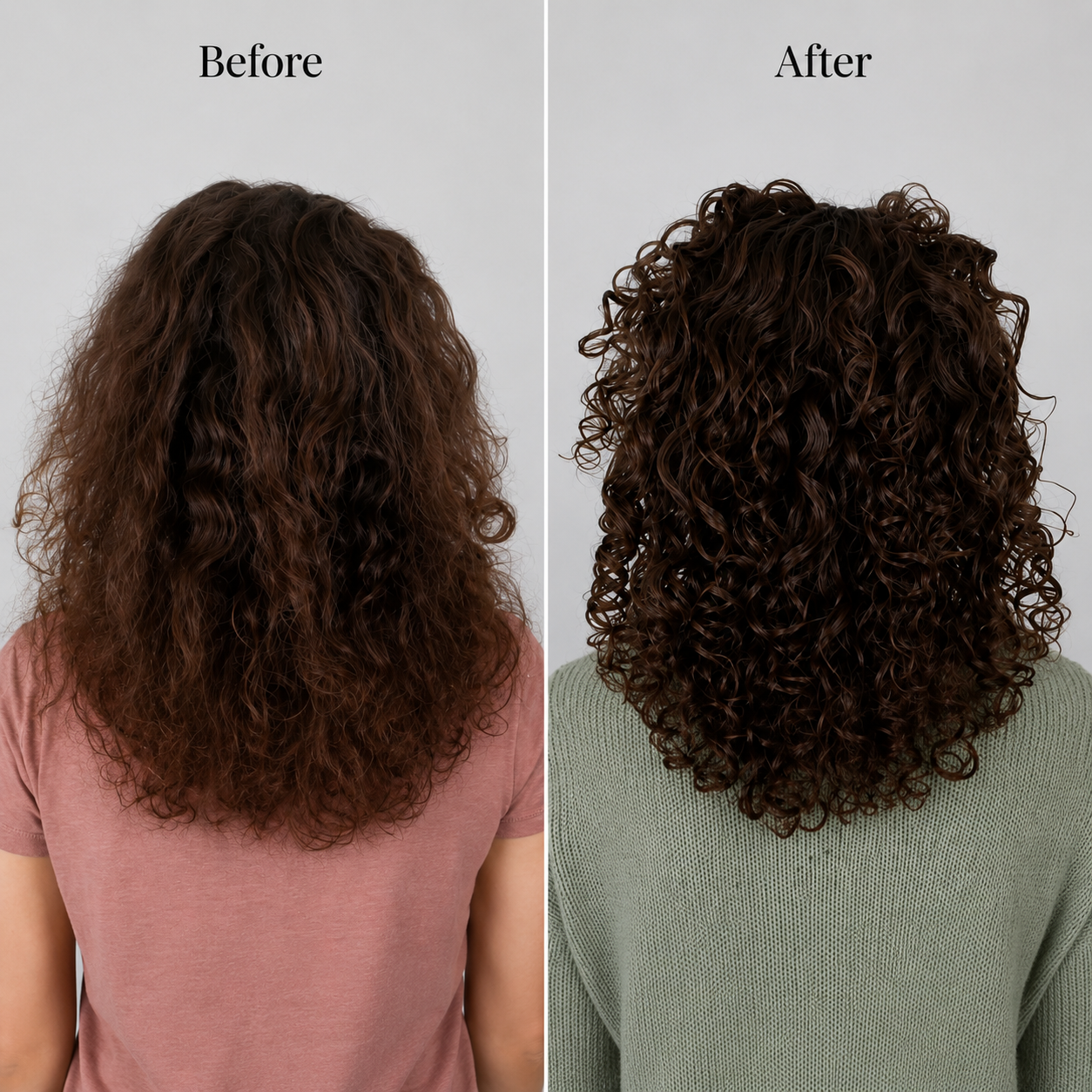
My hair no longer feels like straw and my body isnt dry. I noticed a difference the first shower... amazing.
Your zip tested very hard. This is the fix for exactly that.
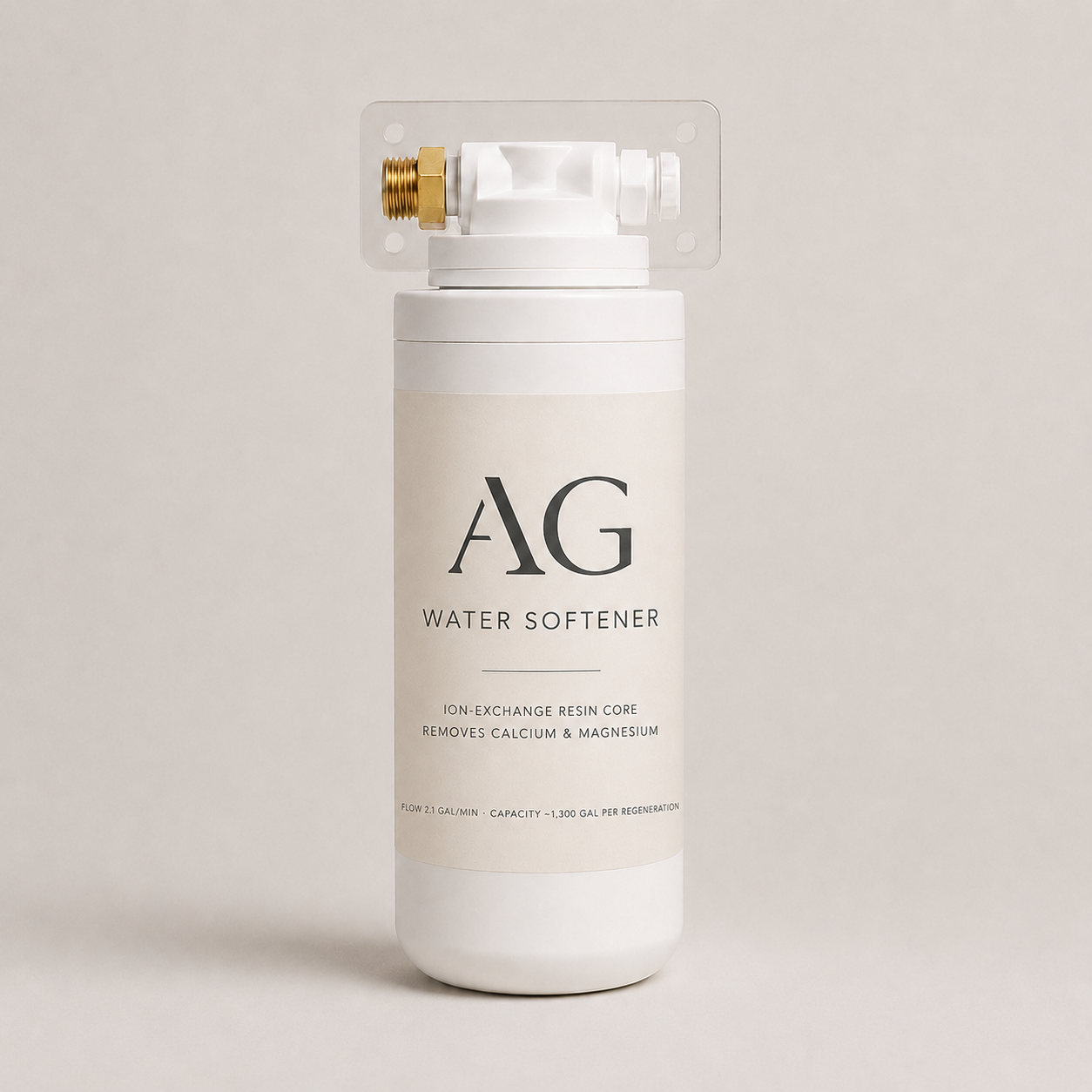
The AG Water Softener pulls the hard-water minerals out of your shower before they ever touch your hair and skin, so the soft, swishy hair you only get on vacation becomes what home feels like. Most people notice the difference in their very first shower.
The softening technology inside $2,000 whole-house systems, sized to fit your shower.
Most of a whole-house system's price is the plumbing and the installer. This is the part that actually softens your water.
One unit softens one shower.
Love your water or send it back. The guarantee starts the day it arrives.
Ships free with tracking, typically arriving in 12 to 18 days. Faster shipping available at checkout.

Maybe it was a hotel. Or a week at your sister's place in another city.
You washed your hair with the same shampoo you use at home, out of the same travel bottle. And something strange happened...it lathered. Your hair dried soft and swishy instead of poofy and wiry. Your face didn't feel tight ten minutes after you stepped out.
You probably credited the hotel shampoo or just being relaxed.
Then you came home, showered in your own bathroom, and within days everything went back: the frizz, the tangles, the tightness, the flakes.
Same you. Same products.
The only thing that changed was the water.
Unless you're in one of the lucky pockets of the map, your water is what the USGS classifies as "hard" or "very hard" — loaded with dissolved calcium and magnesium. Every shower leaves a fine layer of these minerals on your hair and skin. It's the same residue you can see on your shower door and your faucet.
“I thought I had hormone problems or something. It was just my water.”
That sentence is the whole story. Something in you has probably suspected this for a while...and you were right.
If your bathroom has seen a clarifying shampoo, a Malibu C packet, a vinegar rinse, a bottle of "hard water" leave-in, or at least one filtered showerhead from Amazon, you're in good company. Nearly everyone dealing with hard water goes through this.
And each step probably helped a little, for a little while. Then wash day came around and the coated, dull, straw-like feeling came back.
But here's the part nobody selling those products said out loud:
A shower filter reduces chlorine. That's worthwhile, but chlorine was never what made your hair frizzy or your skin tight. Hardness minerals did. And a filter does not remove them.
This isn't a matter of opinion. The industry certification most shower filters point to (NSF/ANSI 177) covers chlorine reduction only. Even filters marketed with "hard water" on the box will state, somewhere in the fine print, that they don't remove calcium or magnesium.
So the water coming out of your filtered showerhead was cleaner. It just wasn't softer. It sends the exact same minerals to your hair and skin as the day you installed it.
Which means every disappointing result you've had was the predictable outcome of solving the wrong half of the problem.
People who finally get soft water at home tend to describe it the same way, in the same order.
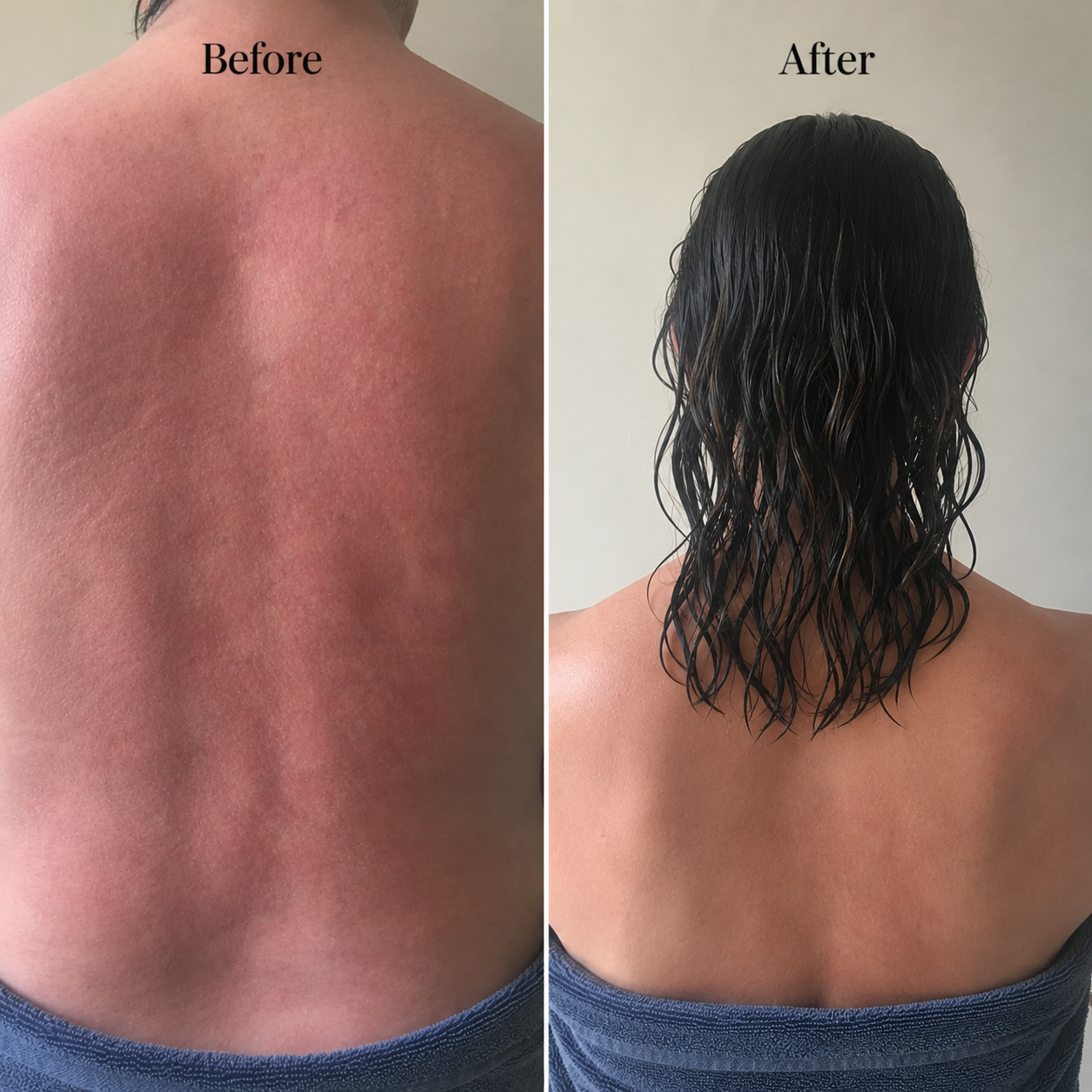
Water feels different immediately. Soap lathers more and rinses cleaner, because there are no hardness minerals left for it to bind to.
Hair holds moisture instead of drying stiff. The mineral film that built up over months starts washing out with each shower.
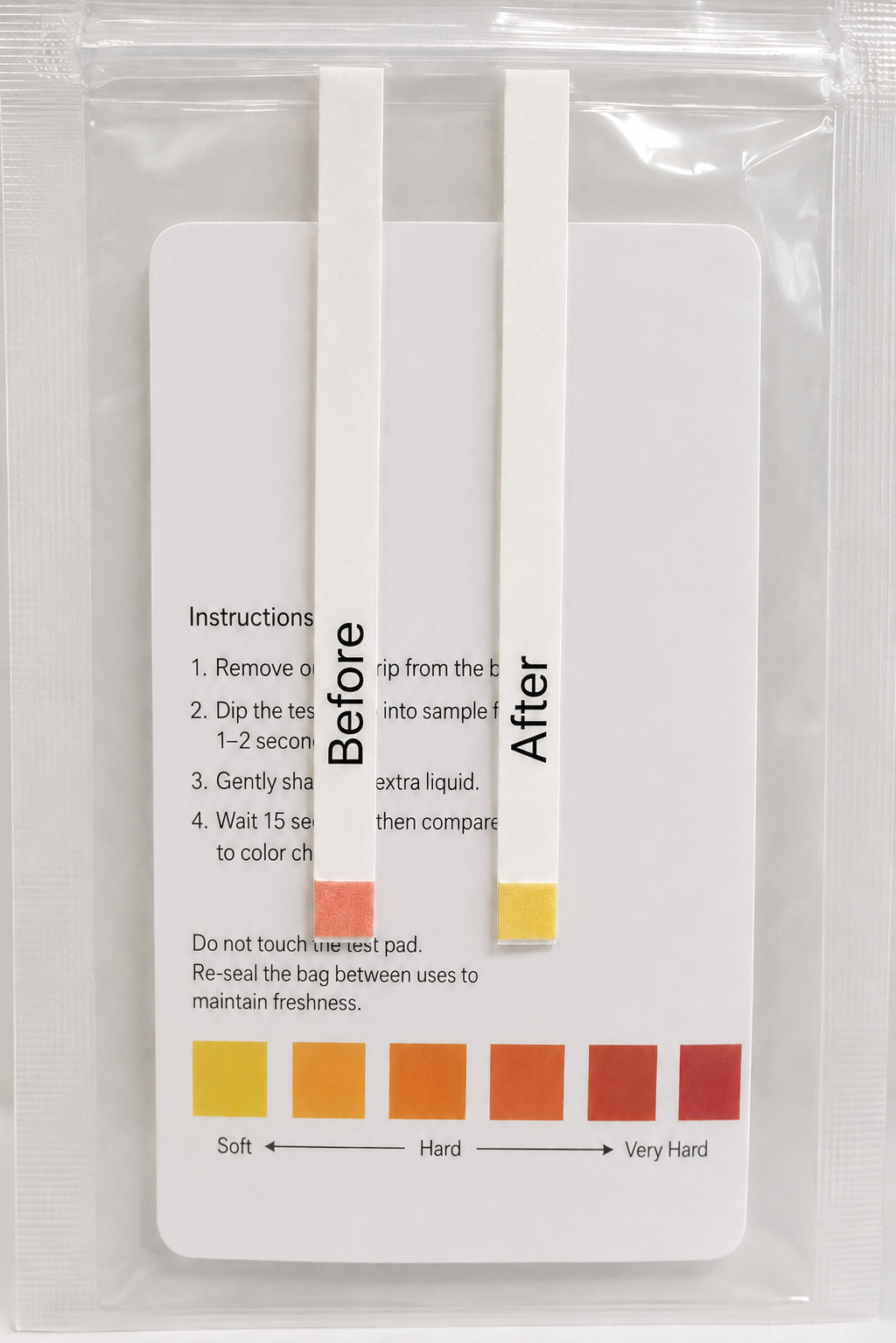
A hardness test strip tells you what your skin already noticed. Any $10 strip works. Run one on your tap water, then on your shower water, and compare.
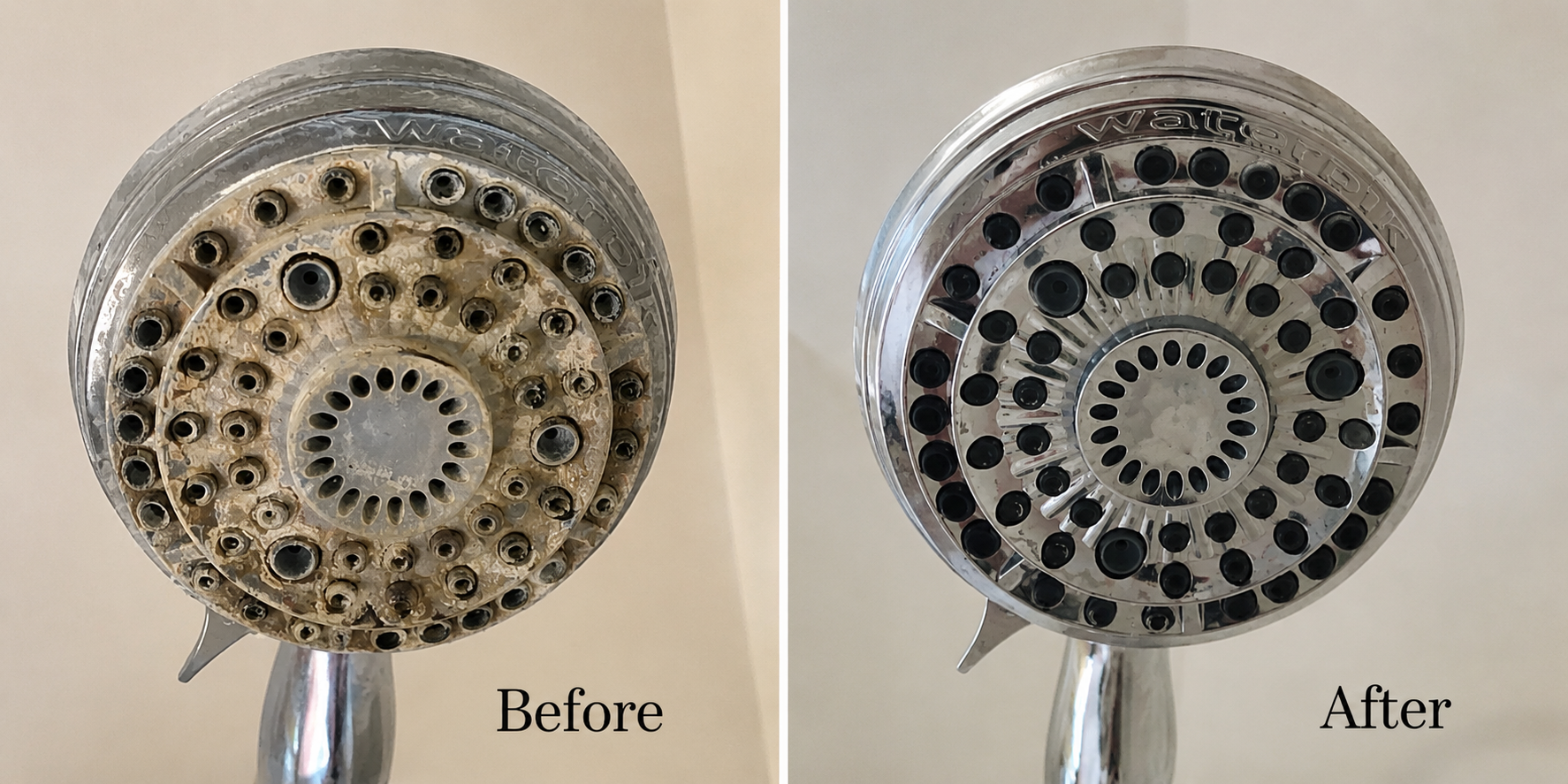
Scale stops building on the shower glass. What was there before is the last of it.
That's the real outcome here: mornings where your hair and skin cooperate, and a routine that finally pays you back for the effort you put into it.
Dermatology researchers washed hair in hard water for thirty days and examined it under an electron microscope (see the study). The hard-water strands carried about three times the calcium and four times the magnesium of strands washed in distilled water, measured thinner, and showed a ruffled surface instead of a smooth one. That roughened surface is what you experience as coarseness and dullness.
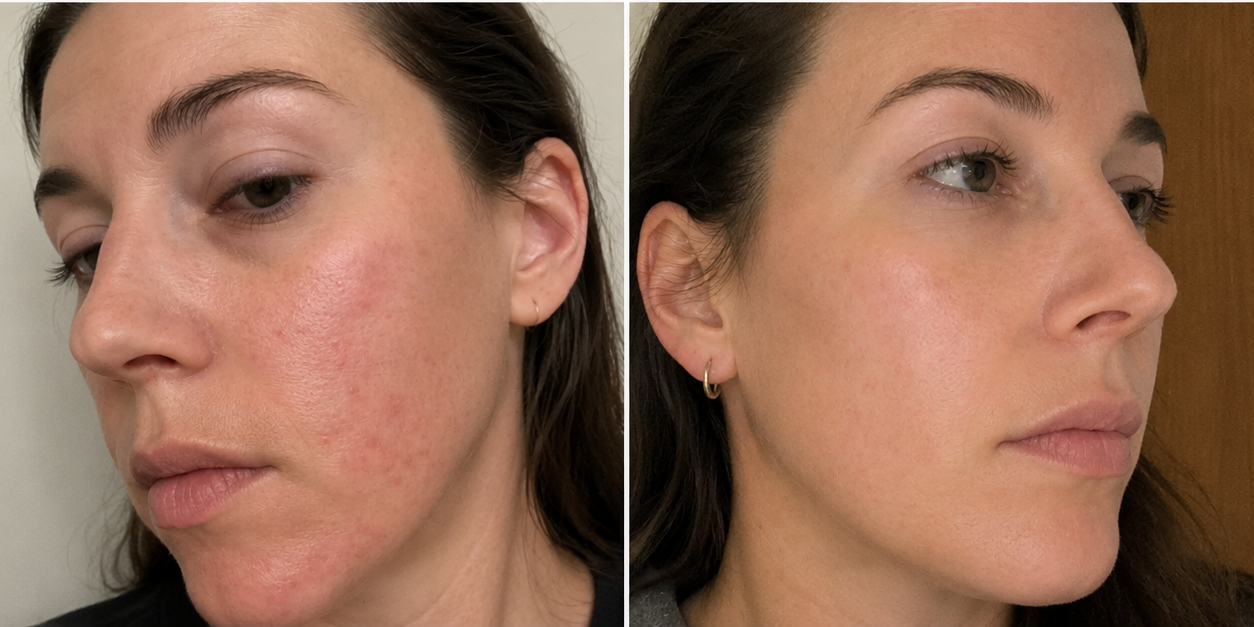
Research published in the Journal of Investigative Dermatology (see the study) found that washing with hard water leaves significantly more soap residue clinging to the skin, which raises water loss through the skin barrier — the mechanism behind that tight, stripped feeling after a shower. The same researchers found that softening the water by ion exchange reduced this effect.
Ion exchange is exactly the technology inside the AG Water Softener — the same mechanism, at shower scale.
The chemistry that removes hardness minerals from water — ion exchange — has been understood since 1905.
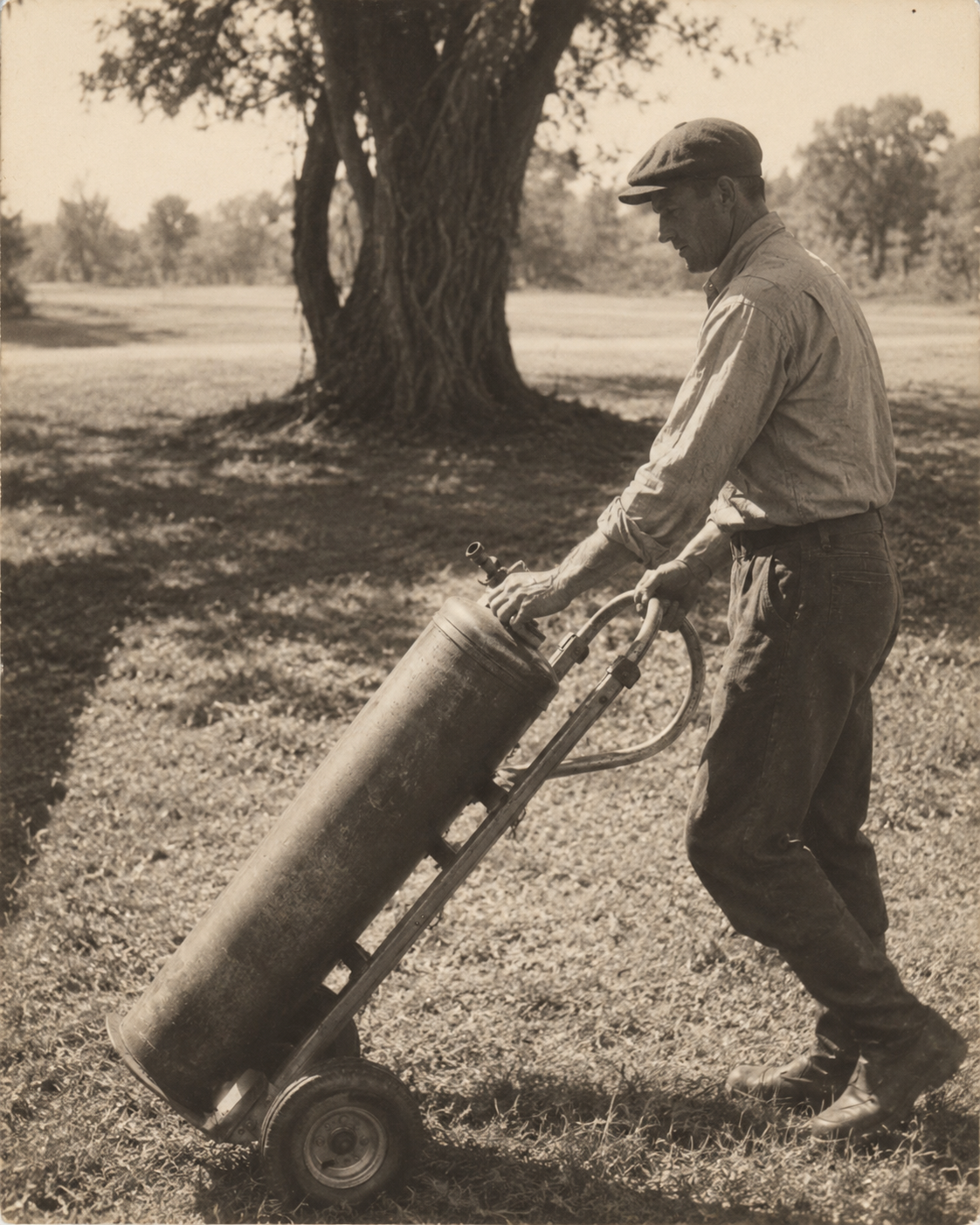
In the 1930s, portable softening was an ordinary household service. Families rented compact exchange tanks and swapped them out monthly when the resin was spent, without ever touching their plumbing. Soft water, delivered at apartment scale.
Then the industry consolidated around two formats: big whole-house systems for homeowners, and cheap chlorine filters for everyone else. The convenient middle, true softening sized for renters, simply stopped being made.
So if you've spent years feeling like the actual fix was locked behind homeownership and a four-figure quote, you weren't wrong about the fix. The technology existed the entire time. It just needed to be rebuilt for the way people live now, leases and all.
That's what the AG Water Softener is.
The AG Water Softener is deliberately a one-job machine. As you now know, filtering and softening are two different jobs — this is the one that fixes hard water, and the one no filter can do.
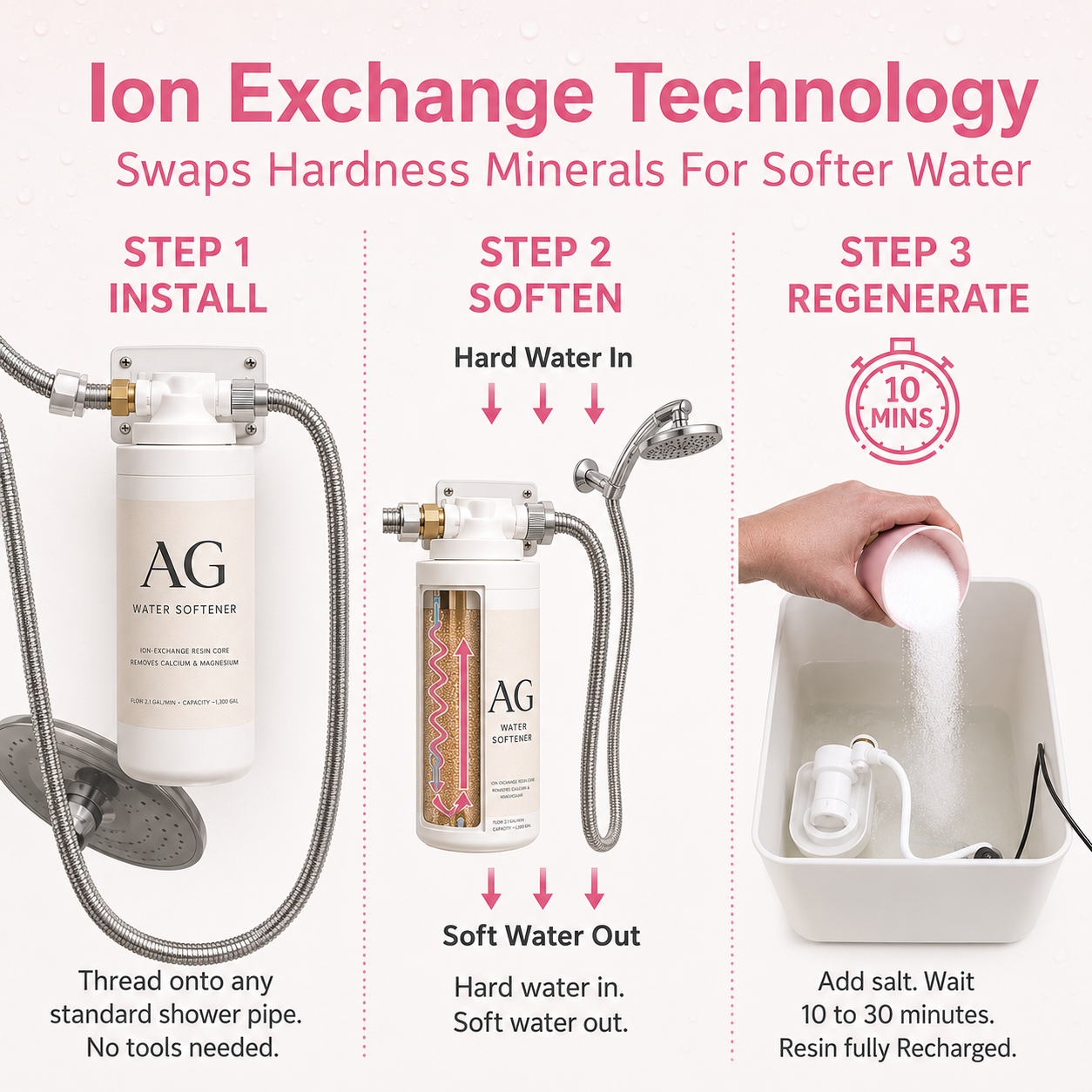
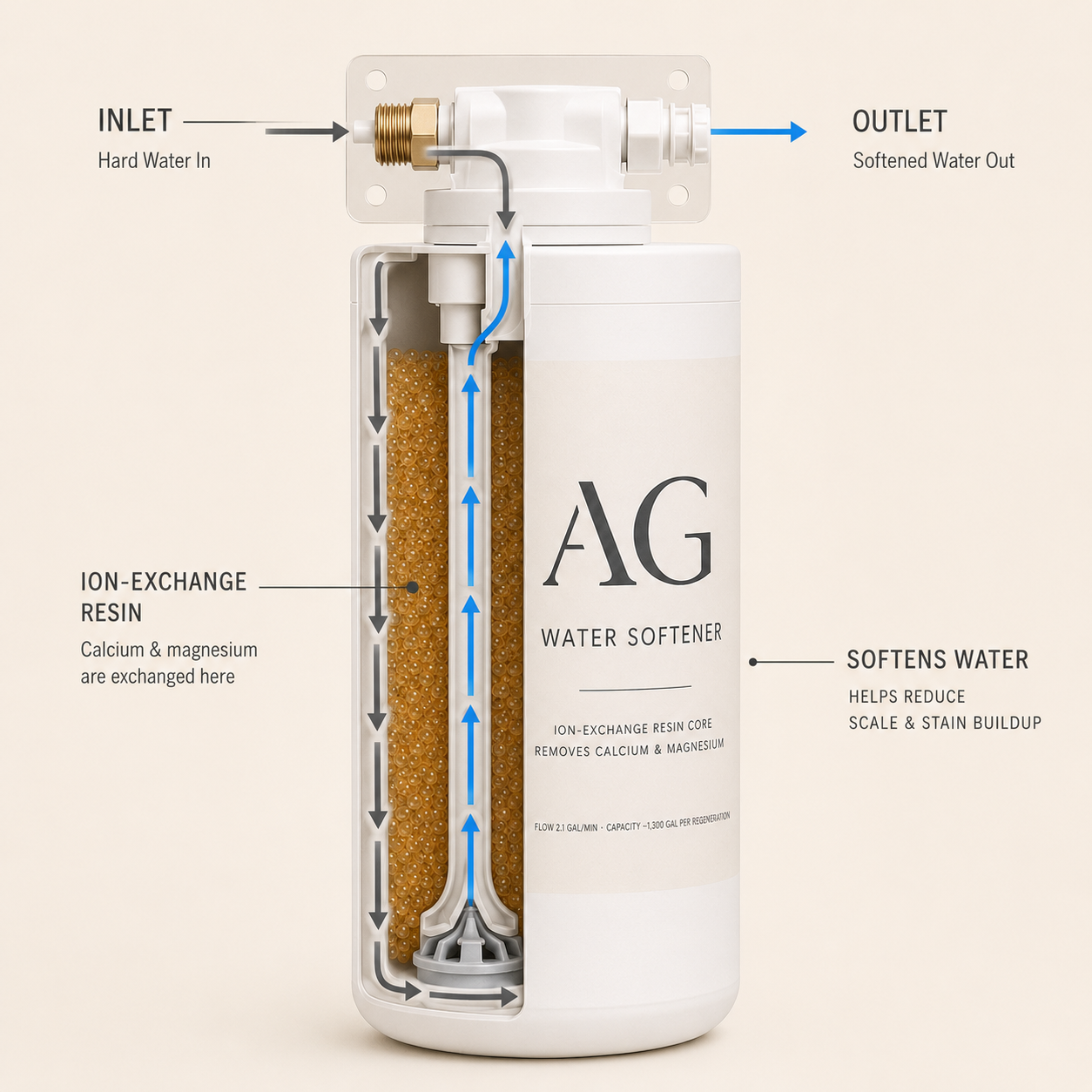
The heart of the AG Water Softener is a bed of ion-exchange resin — the same class of tech inside whole-house softeners that homeowners describe as "the best hair product investment" they've made.
As water passes through, the resin captures calcium and magnesium ions and releases harmless sodium ions in their place. The minerals that coat your hair and crust your shower door get pulled out of the water before it ever reaches you.
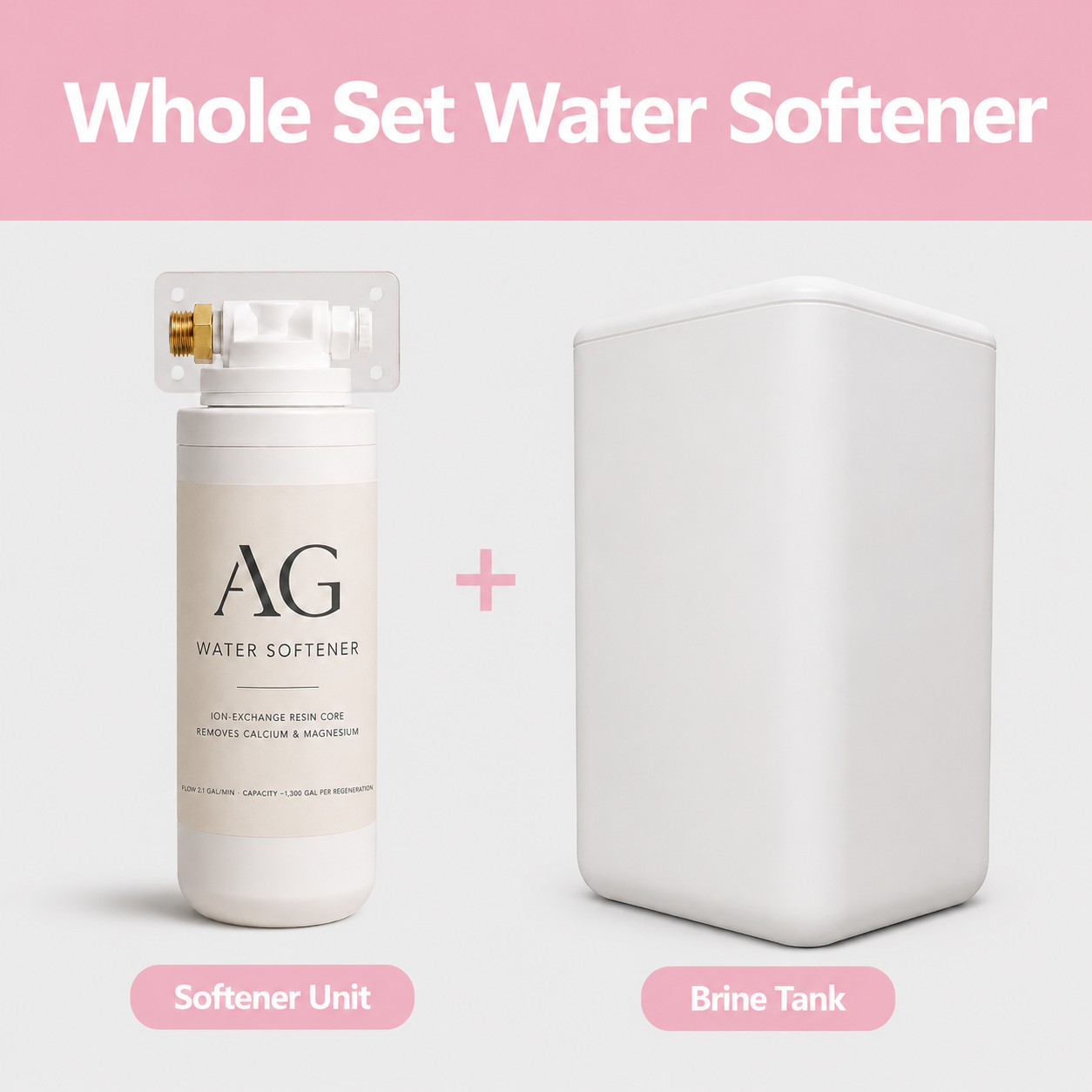
When the resin fills up, the included salt tank recharges it — about 30 minutes every 3 to 5 weeks.
This is the important part no filter does. It's the entire reason the AG Water Softener exists.
Any standard hardness test strip reads the AG's output. Grab a pack and run the before and after yourself.
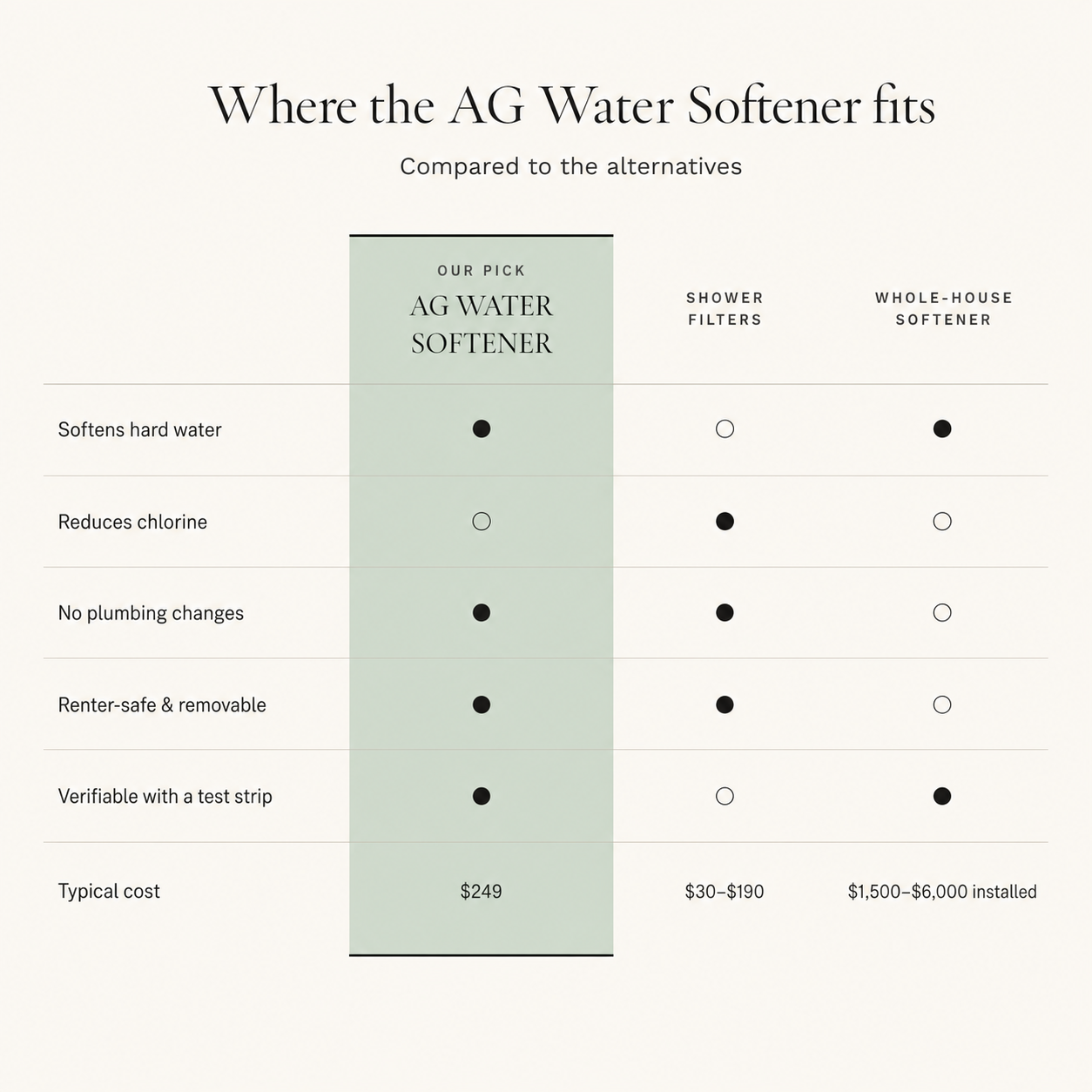
How it compares to shower filters and whole-house softeners.
Our pick AG Water Softener | Shower Filters | Whole-House Softener | |
|---|---|---|---|
| Softens hard water (removes calcium & magnesium) | |||
| Reduces chlorine | |||
| No plumbing changes to install | |||
| Renter-safe & fully removable | |||
| Verifiable with a hardness test strip | |||
| Typical cost | $249 | $30–$190 | $1,500–$6,000 installed |
Whole-house results, at shower-sized commitment. And if a test strip doesn't read soft, you have 60 full days to send it back.
A whole-house softener's price tag is mostly installation, plumbing runs, and the labor to tie it all together. The AG is the softening part alone, the ion-exchange core that does the actual work, which is why it can cost $249 instead of $2,000.
Where these reviews come from. Every review here is from a verified AG customer. We invite each one by email after their unit has been in the shower for a while. We don't pay for reviews, and we don't edit them beyond removing personal details. What customers write is what gets published, good or bad.
My hair no longer feels like straw and my body isnt dry. I noticed a difference the first shower... amazing.
It's a much better shower experience! We are used to soft water and recently moved to a location with hard water that has affected our skin and hair. Now the water feels less harsh and our skin doesn't feel as itchy after showers. Setup was super easy and it takes up barely any space in the shower!
Water hardness: 190 → 5 ppm
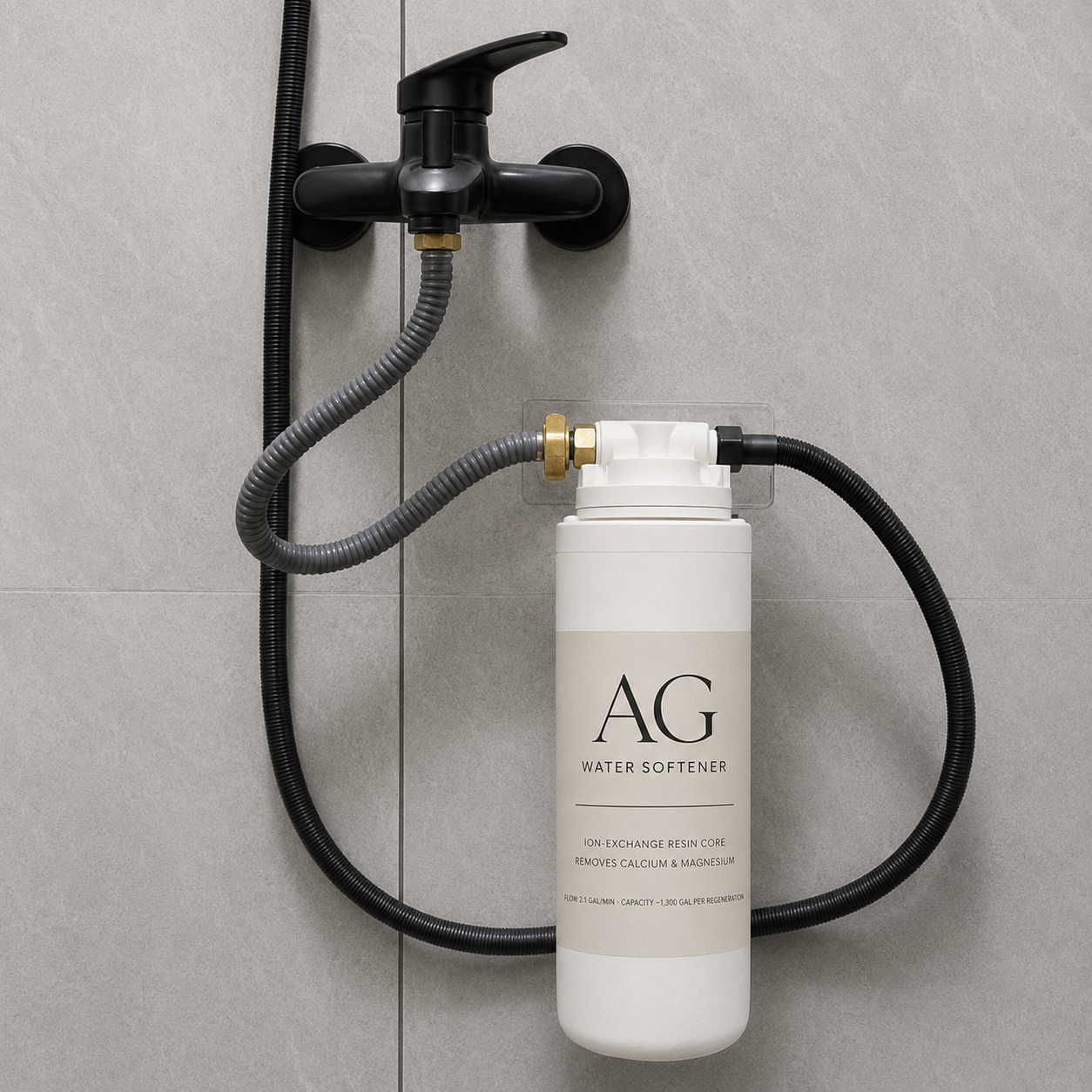
Installed by you in about 10 minutes, in the one room where your hair and skin meet the water.
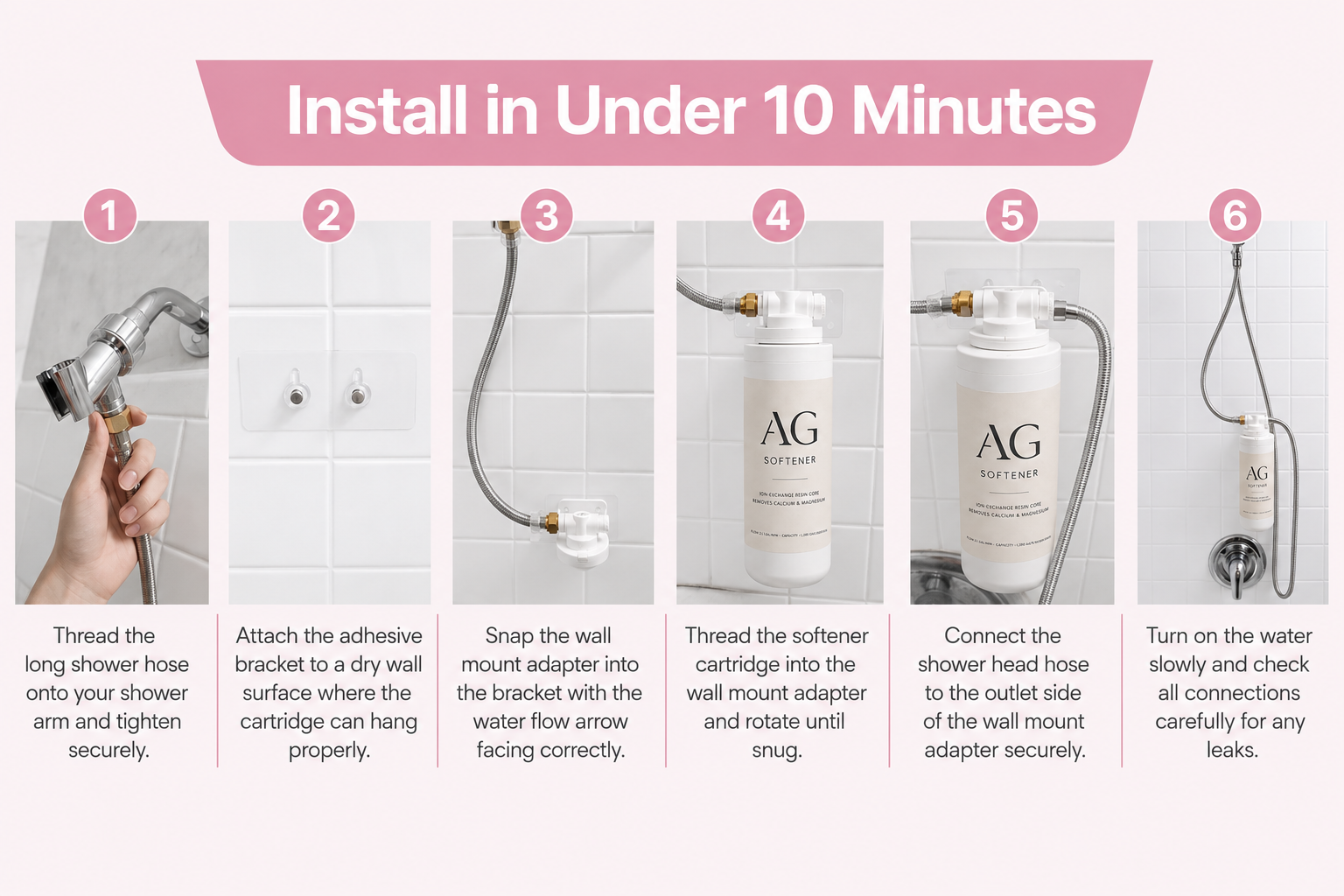
When you move out, removal takes about as long as installation, and your shower goes back to exactly how you found it. Nothing to patch or explain at the walkthrough.
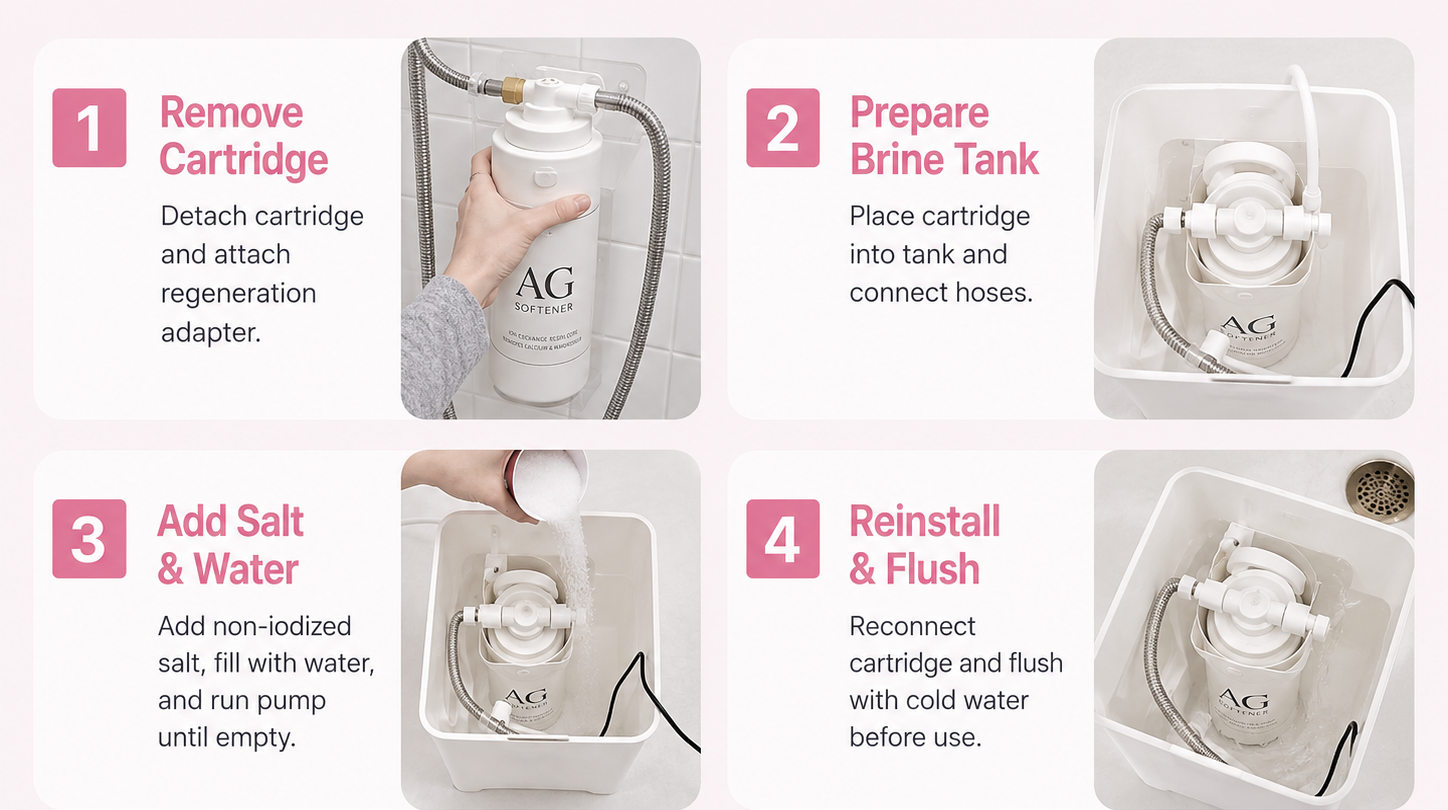
A true softener needs occasional care, because the resin that captures hardness minerals eventually fills up and has to be rinsed clean with salt water. Every real softener on earth works this way, including the $2,000 ones. Here is exactly what the AG Water Softener asks of you:
Your hands-on time is about ten minutes. The pump runs the 30-minute cycle on its own, and you shower normally the rest of the time.
Simple 30-minute AG softener recharge process
If that ritual every month or so sounds like more than soft water is worth, this product isn't for you, and we'd rather say so here than in a return email. If it sounds like a fair trade for hair and skin that behave every single day in between, keep reading.
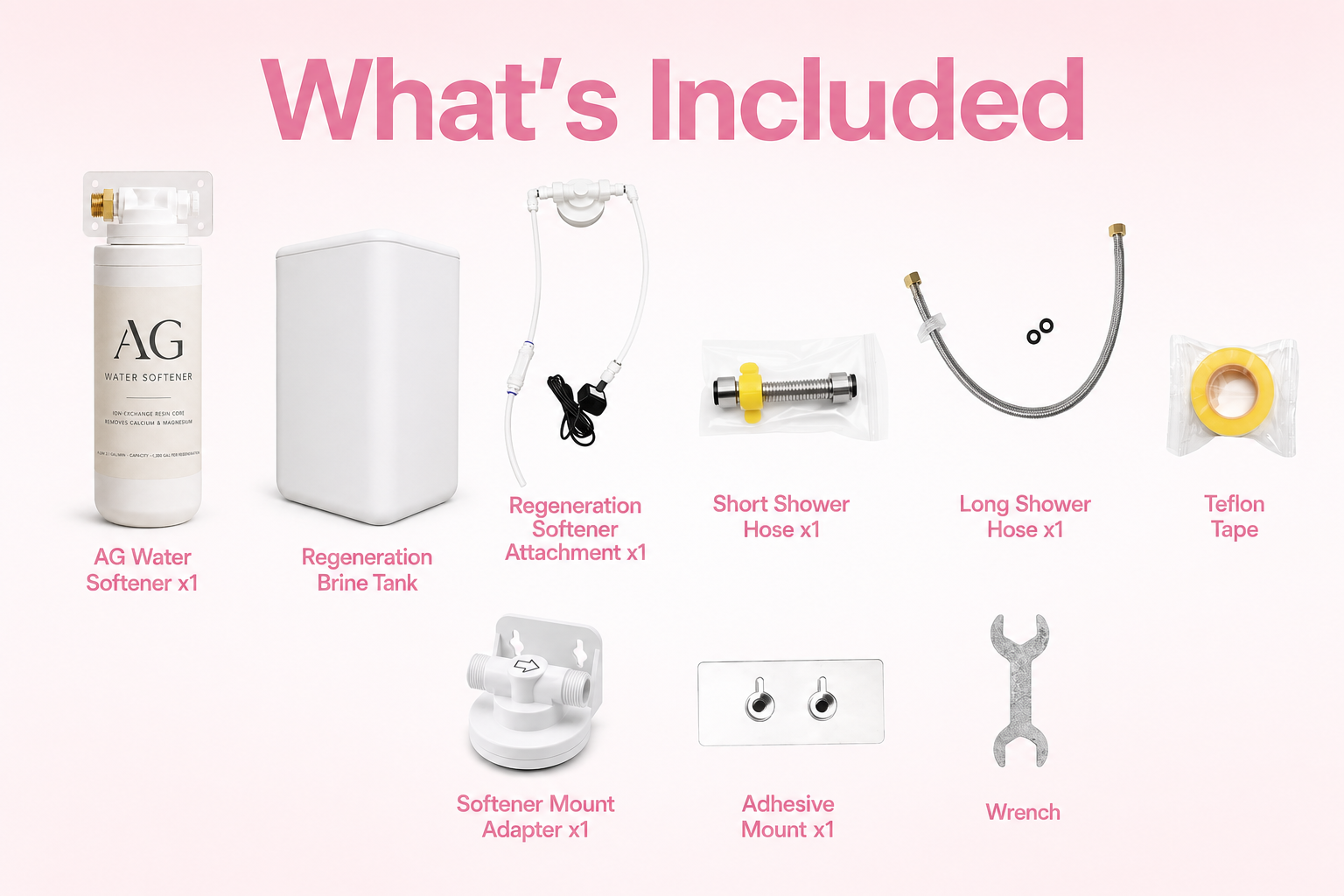
Strips run about $10 at any hardware store. Dip a hardness test strip in your tap water before you install. After installation, dip another strip in the treated water and compare the two colors to confirm your water now tests soft.
The resin inside the softener needs to be rinsed with salt water roughly every three to five weeks. Hands-on time is about ten minutes; the soaking step runs on its own.
The unit threads onto a standard shower arm or sits on the floor. No plumber, no permanent changes. Everything is fully removable when you move.
The purchase price is the smaller number. What separates these products is what they consume.
| Day 1 | Year 1 total | Year 2 total | |
|---|---|---|---|
| AG Water Softener | $249 | $249 | $313 |
| Jolie | $169 | $274 | $414 |
| Canopy | $150 | $231 | $339 |
Competitor prices as of September 17, 2026. Canopy shown at their subscription filter price.
Jolie and Canopy are shower filters. They remove chlorine and do that job well, and neither removes the calcium and magnesium that make water hard. The AG costs more on day one because the cartridge holds ion-exchange resin instead of carbon, and resin is what softening requires.
The AG runs on one replacement canister a year, $64 shipped on its own or $39 when it ships with your unit, plus plain salt from the grocery store. Filter cartridges replace every 90 days. That difference is the whole table.
The AG Water Softener is engineered for full-flow showering, and pressure preservation was a core design requirement, since it's the most common complaint about lesser shower products.
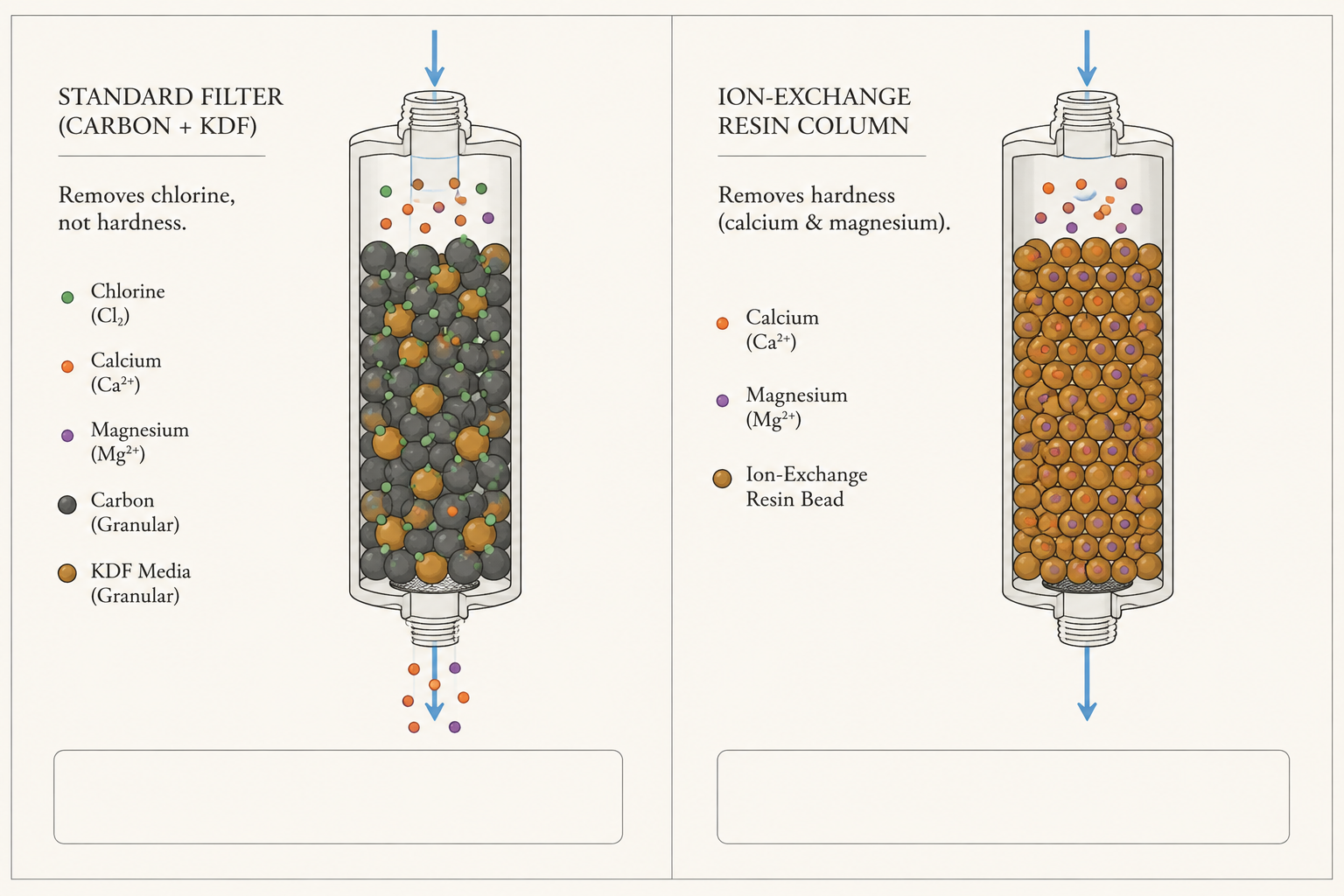
A lot of our customers bought a shower filter first. The water smelled better and the spots stayed. Here's why.
A filter is full of carbon bits that grab chlorine as the water flows past. Calcium and magnesium (hard water-causing minerals) are different though. They're dissolved in the water (like sugar in tea) so they slide right past the carbon and out of your shower head. So the filter did its job, but hard water needs a different tool: ion-exchange resin. Resin beads hold on to calcium and magnesium the same way carbon holds on to chlorine. The full story is in our guide.
An ion exchange shower softener removes hardness by swapping minerals, not by filtering them.
The canister holds a bed of resin beads loaded with sodium ions. When hard water flows through, calcium and magnesium stick to the resin and sodium enters the water in their place. The minerals that would coat your hair and skin now leave the water before it ever reaches the shower head.
The resin fills up as it works. No shower filter runs this exchange. Resin is the only material that trades hardness out of the water.
Soaking the resin in salt water pulls the trapped minerals off the beads and reloads them with sodium, which restores its roughly 1,300 gallons of capacity. The recharge is the cost of actually removing minerals instead of filtering around them.
A hardness test strip dipped before and after the unit shows the swap in your own water.
Hardness strips cost about $10 online. Dip a hardness strip in your tap water today. Install the AG, then dip another strip. If the second strip doesn't read soft, you have 60 full days to send it back for a complete refund. Softer hair and skin in the meantime.